THE USEFUL ANSWER
A business blog needs a clear audience, maintainable publishing system and useful first articles. Choosing a theme is only part of the work. Plan how each article will be reviewed, discovered and connected to the business before committing to a publishing schedule.
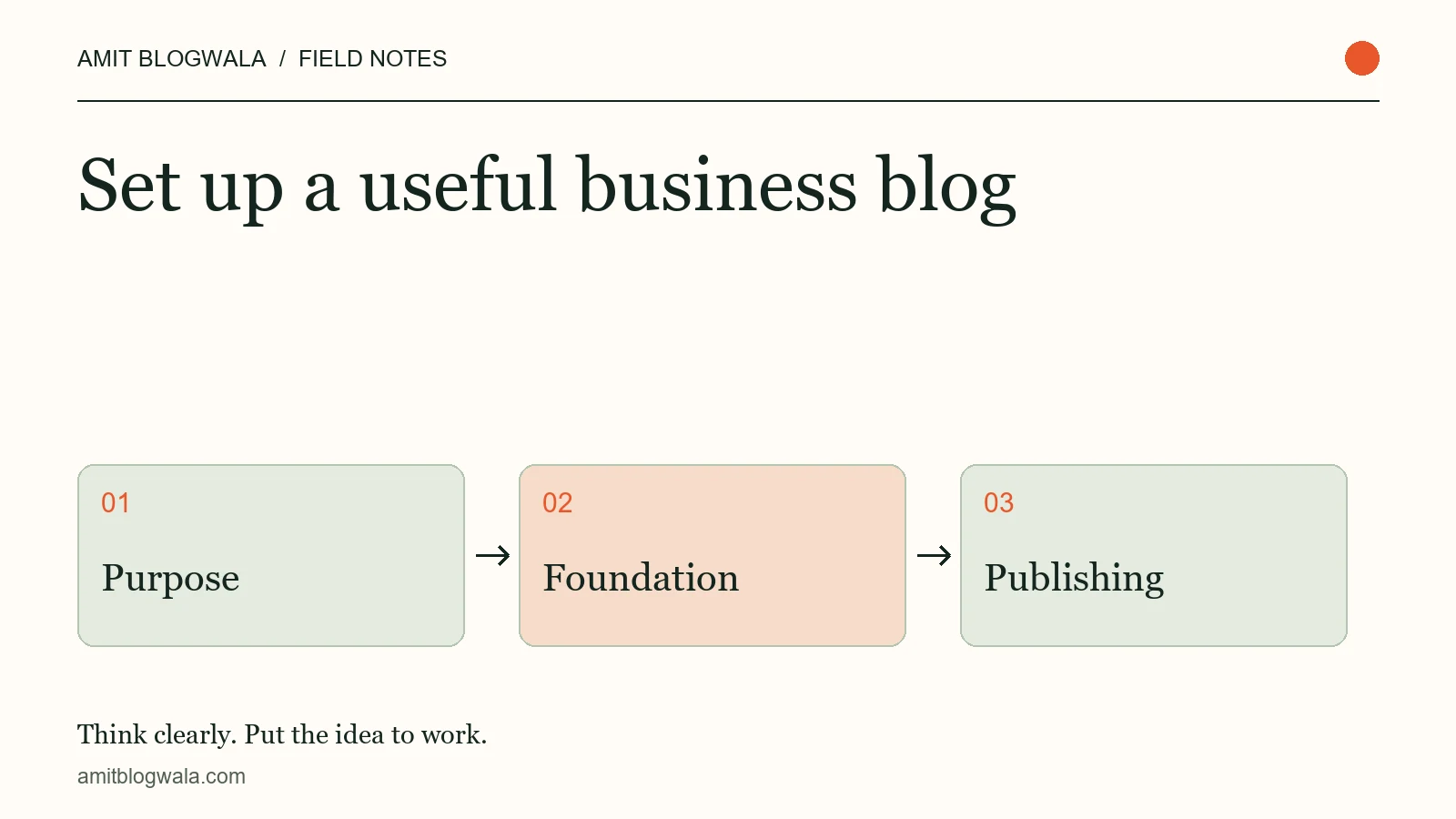
Choose one audience and list the questions that arise before or after buying.
Set up stable URLs, readable templates, essential policies and a sensible navigation path.
Create one complete article with sources, appropriate visuals and an owner for future updates.
Launch with a complete reading journey
Draft a small topic map around questions people ask before choosing your service. Give each proposed article a distinct purpose so several pages do not repeat the same introductory answer. Choose a publishing rhythm that leaves time to review existing material.
Before announcing the blog, open an article from its archive card, follow a related link and test its contact path. Check that the author, publication information and source context are understandable. Decide who maintains broken links and product references. A blog is an ongoing editorial responsibility; an attractive archive with thin or abandoned articles does not fulfill that responsibility.
A worked example
Illustrative example, not a client case study. A coach could start with three articles answering questions prospective clients ask before a first conversation. Each article can explain one issue, state its limits and link to a relevant next step. This is a smaller, more maintainable starting point than launching several empty categories.
Sources and context
This is practical editorial guidance, not a tested guarantee of rankings, leads, sales or income. The right approach depends on your audience, resources and actual results.
Sources provide product, policy or background context; the application framework above is an editorial recommendation. Links reviewed 17 October 2026.
Continue with more articles from Amit, or explore the current ways to work together.