THE USEFUL ANSWER
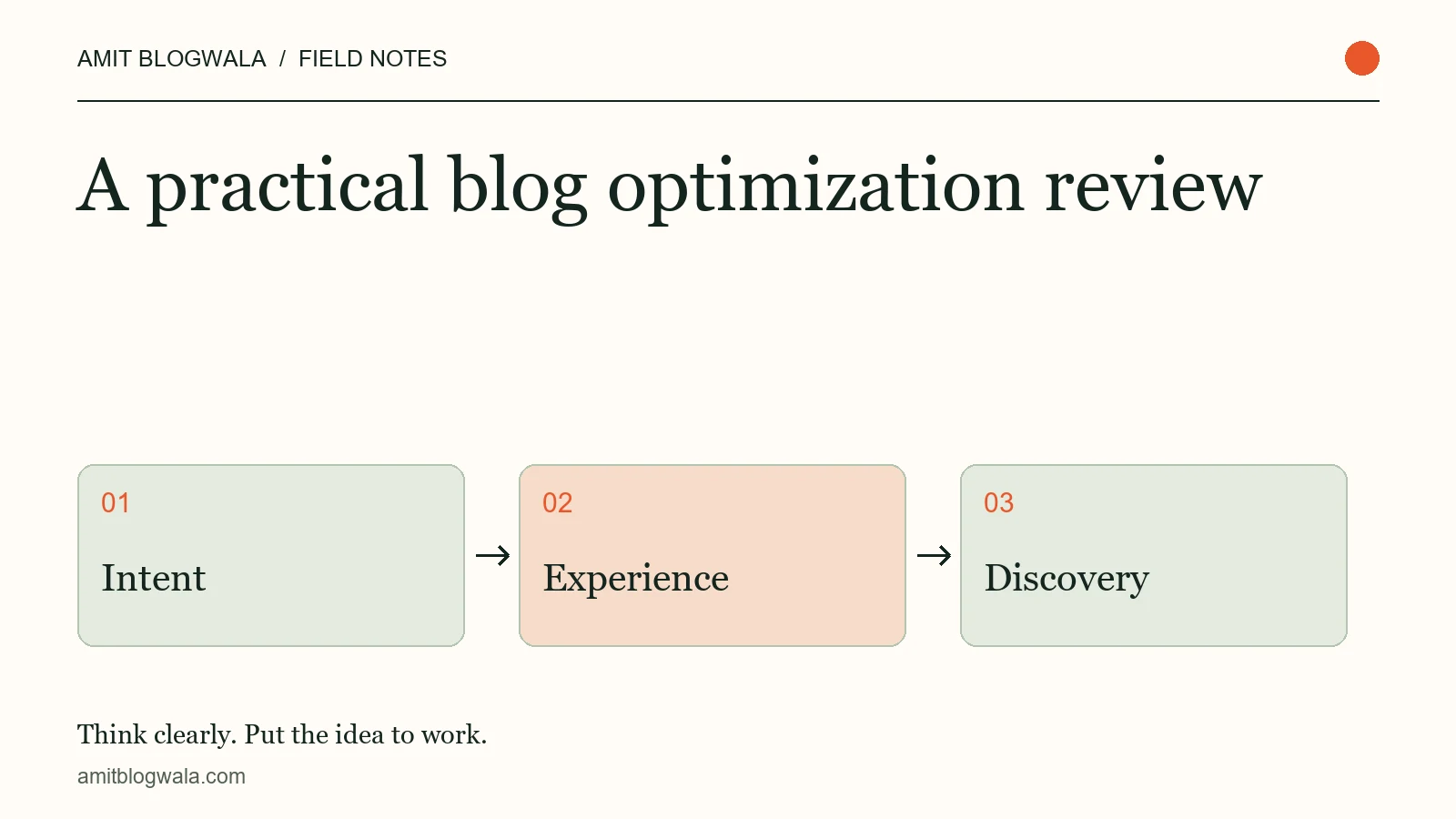
Blog optimization is a review of whether a page answers a real question clearly and can be discovered, read and used. Fix unclear content, broken links and indexing problems before treating word count or keyword repetition as progress.
Compare the article's promise with the question its reader is trying to answer.
Check headings, mobile reading, images, source links and the next useful article.
Review status codes, canonical URLs, indexing controls and actual search-performance data.
Prioritize the problem you can demonstrate
Start with an article that matters to the business and inspect it at its public URL. Confirm that the title and opening address the same question. Check whether source links support the associated claims and whether each visual explains something the text needs.
Separate content problems from technical problems. A missing answer requires editing; an unintended noindex directive requires an indexing correction. Log the issue, evidence, owner and verification step. After a change, compare appropriate search queries and useful reader actions over time. A longer article or a higher audit score is not itself evidence that the reader received more value.
A worked example
Illustrative example, not a client case study. Suppose a page attracts visits for a how-to question but opens with a sales pitch. Rewrite the opening to answer the question, add an example and move the service invitation after the useful content. Then compare relevant enquiries and search queries over a suitable period.
Sources and context
This is practical editorial guidance, not a tested guarantee of rankings, leads, sales or income. The right approach depends on your audience, resources and actual results.
Sources provide product, policy or background context; the application framework above is an editorial recommendation. Links reviewed 17 October 2026.
Continue with more articles from Amit, or explore the current ways to work together.