THE USEFUL ANSWER
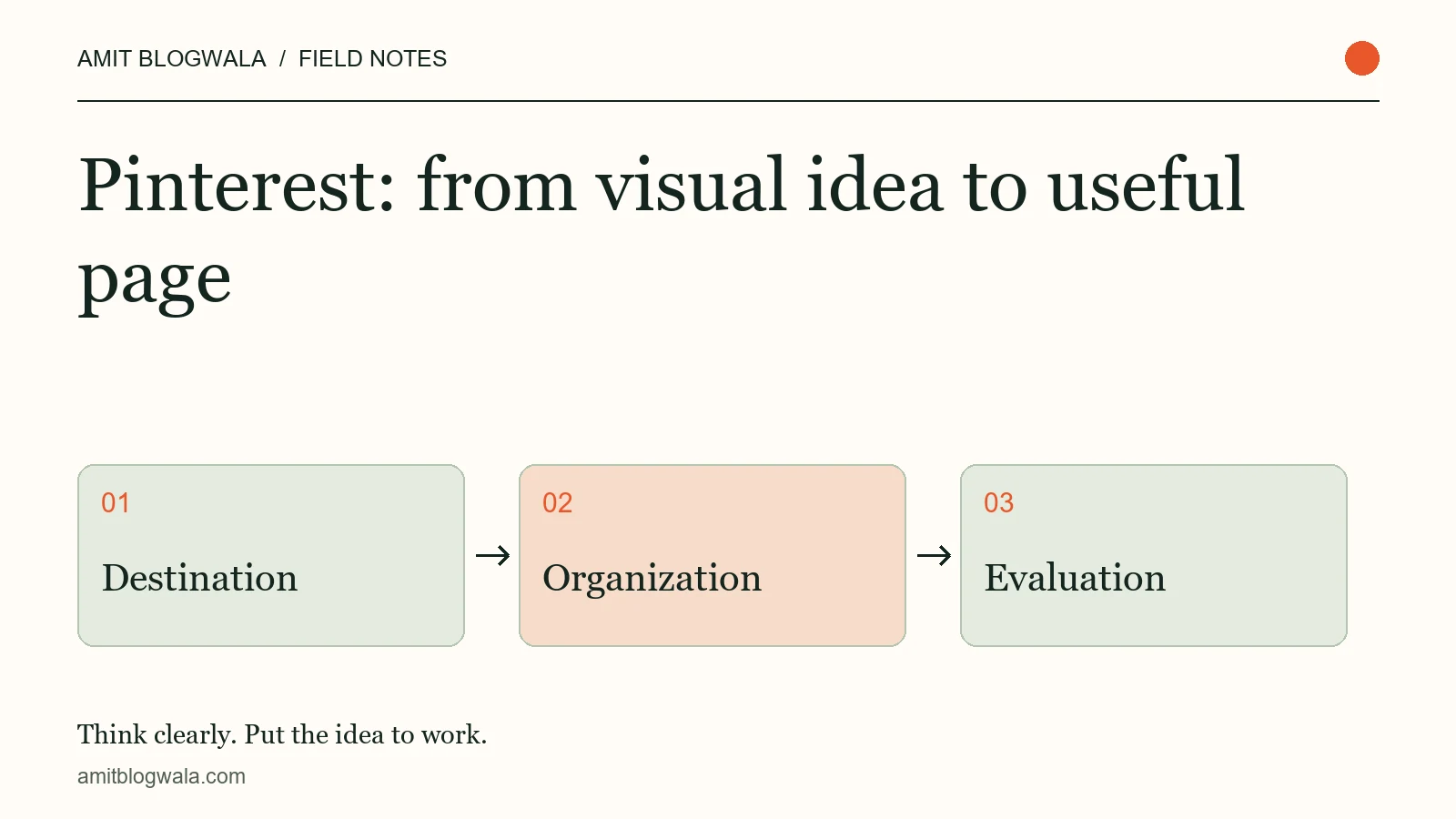
Pinterest can be considered when visual discovery fits your audience and content. Start with a useful destination page and create Pins that accurately describe it. A profile or a set number of Pins does not guarantee traffic or sales.
Make sure the linked page delivers the idea or information promised by the Pin.
Group related ideas clearly and describe them using natural, specific language.
Review useful outbound visits and subsequent actions rather than impressions alone.
Begin with the destination, then make the Pin
A Pin needs a page worth reaching. Review the destination for the question promised by the creative: does it contain the explanation, example or product detail the visitor expects? Check that the page is usable on mobile before creating several variations.
For an illustrative consultant article, a Pin might show a small process diagram and name the problem it addresses. Its destination should explain that process fully. Record outbound visits and meaningful next actions separately from impressions. If visitors arrive but leave without finding the promised information, revise the match between creative and page before treating more distribution as the solution.
Sources and context
This is practical editorial guidance, not a tested guarantee of rankings, leads, sales or income. The right approach depends on your audience, resources and actual results.
Sources provide product, policy or background context; the application framework above is an editorial recommendation. Links reviewed 17 October 2026.
Continue with more articles from Amit, or explore the current ways to work together.