THE USEFUL ANSWER
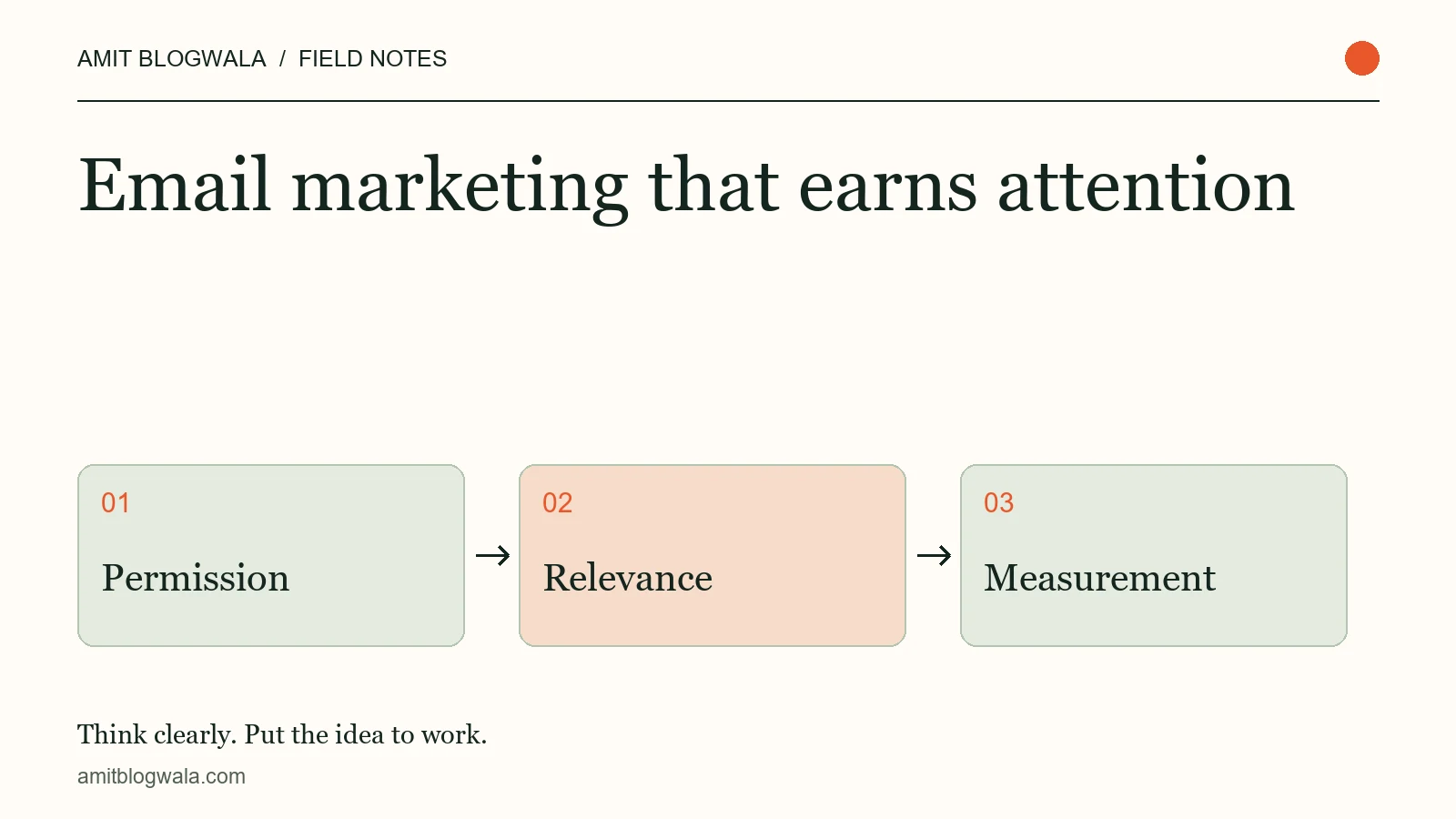
Email marketing is sending useful information or offers to people who have agreed to hear from you. A sound program connects clear permission, a relevant message and a measurable next step. Email delivery and business results are not guaranteed.
Use an understandable sign-up process and keep a working way to unsubscribe.
Segment by a real need or relationship rather than sending every contact the same message.
Compare delivered messages, useful clicks, replies, enquiries and costs; interpret opens cautiously.
Build the subscription around a clear promise
Write the sign-up promise before writing the sequence: what will arrive, why it is useful and how the reader can leave. Deliver the promised material before expanding into unrelated promotions. Organize contacts using relevant permissions and needs rather than assumptions about personal characteristics.
Test the form, confirmation, message display, links and unsubscribe route with authorized test contacts. In reporting, distinguish delivery from engagement and engagement from a qualified enquiry. Record useful replies and the next action as well as clicks. Open tracking can be incomplete or distorted, so avoid treating a high open rate as proof that people read or wanted the message.
A worked example
Illustrative example, not a client case study. A consultant could offer a short email series that answers a specific buyer question. The sign-up form explains what will arrive, each message delivers the promised topic, and an interested reader can reply. Review useful replies and unsubscribes rather than assuming a high open rate proves demand.
Sources and context
This is practical editorial guidance, not a tested guarantee of rankings, leads, sales or income. The right approach depends on your audience, resources and actual results.
Sources provide product, policy or background context; the application framework above is an editorial recommendation. Links reviewed 17 October 2026.
Continue with more articles from Amit, or explore the current ways to work together.