THE USEFUL ANSWER
Digital marketing uses online channels to support communication and customer decisions. It is not automatically more effective than offline activity. Choose channels against audience behavior, available resources and measurable business objectives rather than a technology trend.
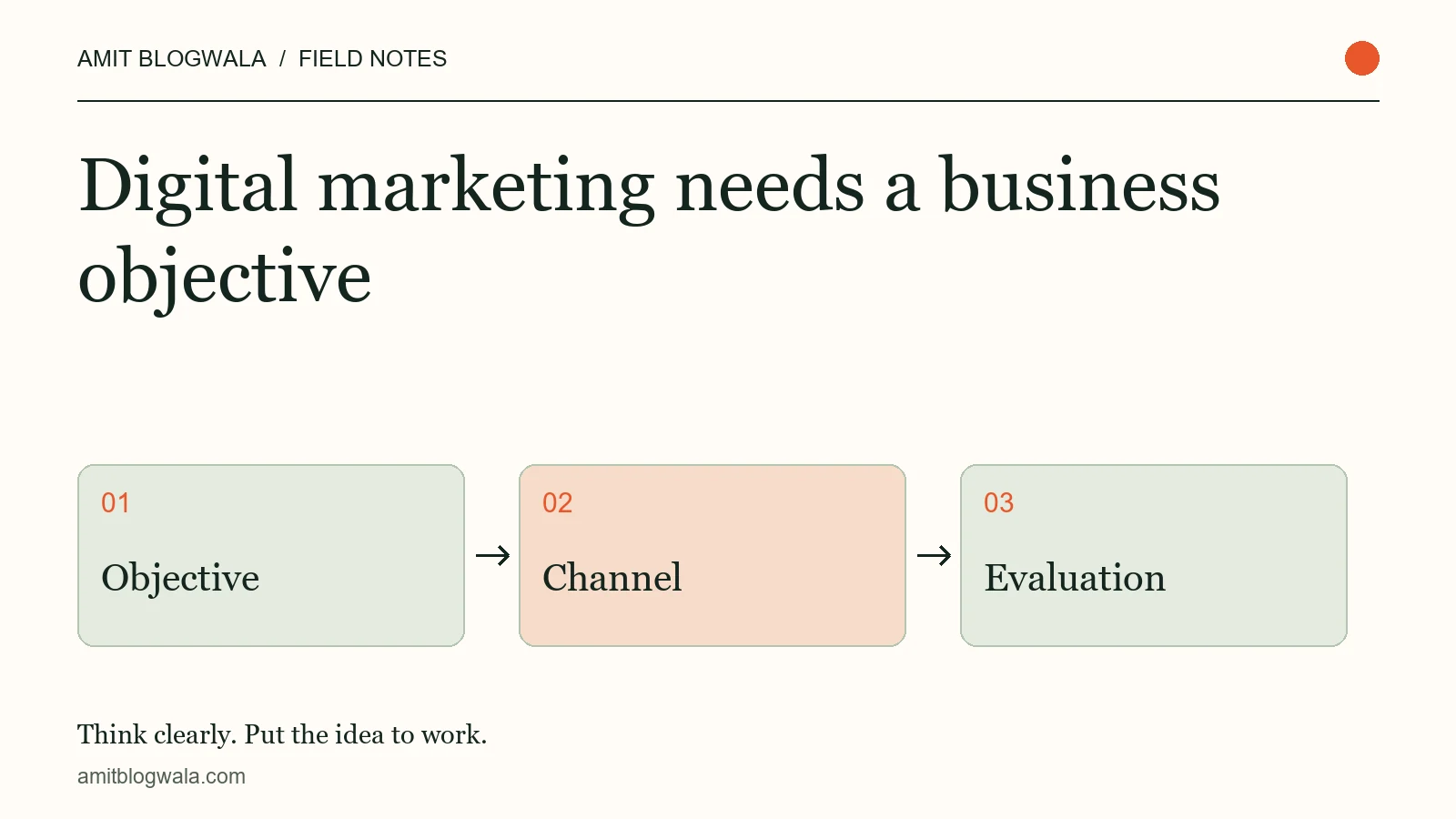
Define the customer action or learning you want the work to support.
Choose where the intended audience can realistically encounter and use the message.
Review qualified outcomes, production effort and costs against the starting position.
Connect the channel to a business decision
Write the customer action or learning the work should support. Then consider where suitable people can encounter a credible explanation and what they need before responding. A search article, referral conversation and social post may serve different parts of that process.
Choose a limited experiment with a defined owner and review point. Record the cost of producing and maintaining the activity, not only distribution spend. Compare qualified outcomes with the starting position and note attribution limits. A digital channel can be measurable in some respects while leaving important questions unanswered; the presence of a dashboard does not make causation certain.
A worked example
Illustrative example, not a client case study. A local service business might compare a referral process, a searchable service page and a relevant social channel. The useful question is which approach produces suitable enquiries at a sustainable cost. Calling an activity digital does not, by itself, make it a better investment.
Sources and context
This is practical editorial guidance, not a tested guarantee of rankings, leads, sales or income. The right approach depends on your audience, resources and actual results.
Sources provide product, policy or background context; the application framework above is an editorial recommendation. Links reviewed 17 October 2026.
Continue with more articles from Amit, or explore the current ways to work together.