THE USEFUL ANSWER
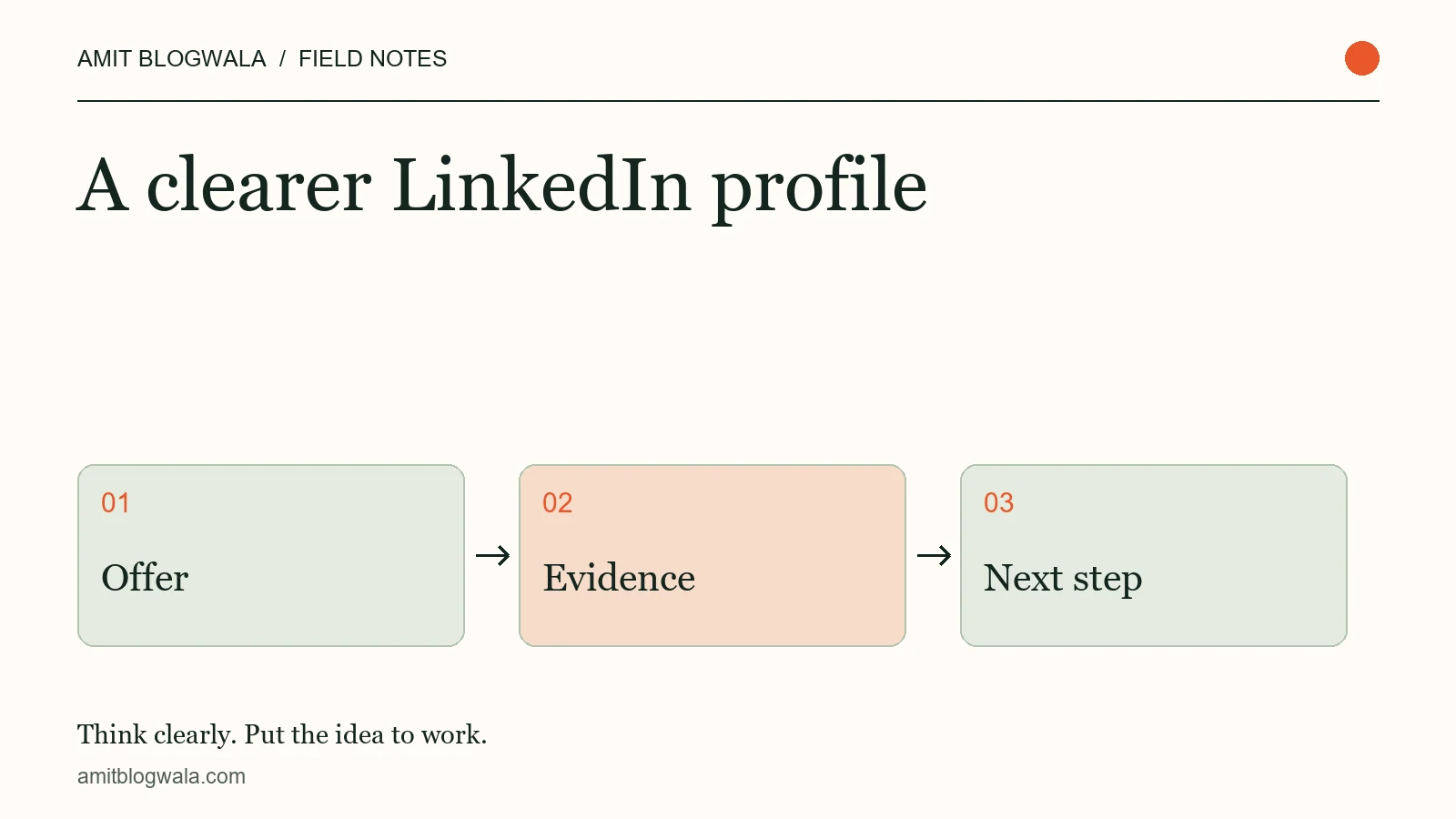
LinkedIn profile optimization means making your work, audience and relevant evidence easier to understand. Start with the headline and About section, support the message with work samples and give a visitor a sensible next step. It is not a guarantee of search visibility or leads.
Explain who you help and the problem you work on in plain language.
Use the Featured section for relevant work samples, with client permission where needed.
Give the reader one appropriate route to learn more or contact you.
A profile review you can actually perform
Read your headline and About section as someone unfamiliar with your work. Can that person identify the audience, the problem you address and the kind of help available? Replace a stack of adjectives with a precise explanation. Avoid titles or results you cannot substantiate.
Use a relevant work sample to show how you think: describe the situation, your contribution and the limits of the example. Remove confidential material and get permission where necessary. Finally, test the next step from a visitor’s perspective. A useful profile should make a decision easier; a complete-looking profile does not guarantee discovery or enquiries.
A worked example
Illustrative example, not a client case study. A consultant might replace a list of job titles with a plain description of the buyer problem they work on. A Featured work sample could then explain a project context, their contribution and its limitations. This illustrates a clearer structure; it is not a client result.
Sources and context
This is practical editorial guidance, not a tested guarantee of rankings, leads, sales or income. The right approach depends on your audience, resources and actual results.
Sources provide product, policy or background context; the application framework above is an editorial recommendation. Links reviewed 17 October 2026.
Continue with more articles from Amit, or explore the current ways to work together.