THE USEFUL ANSWER
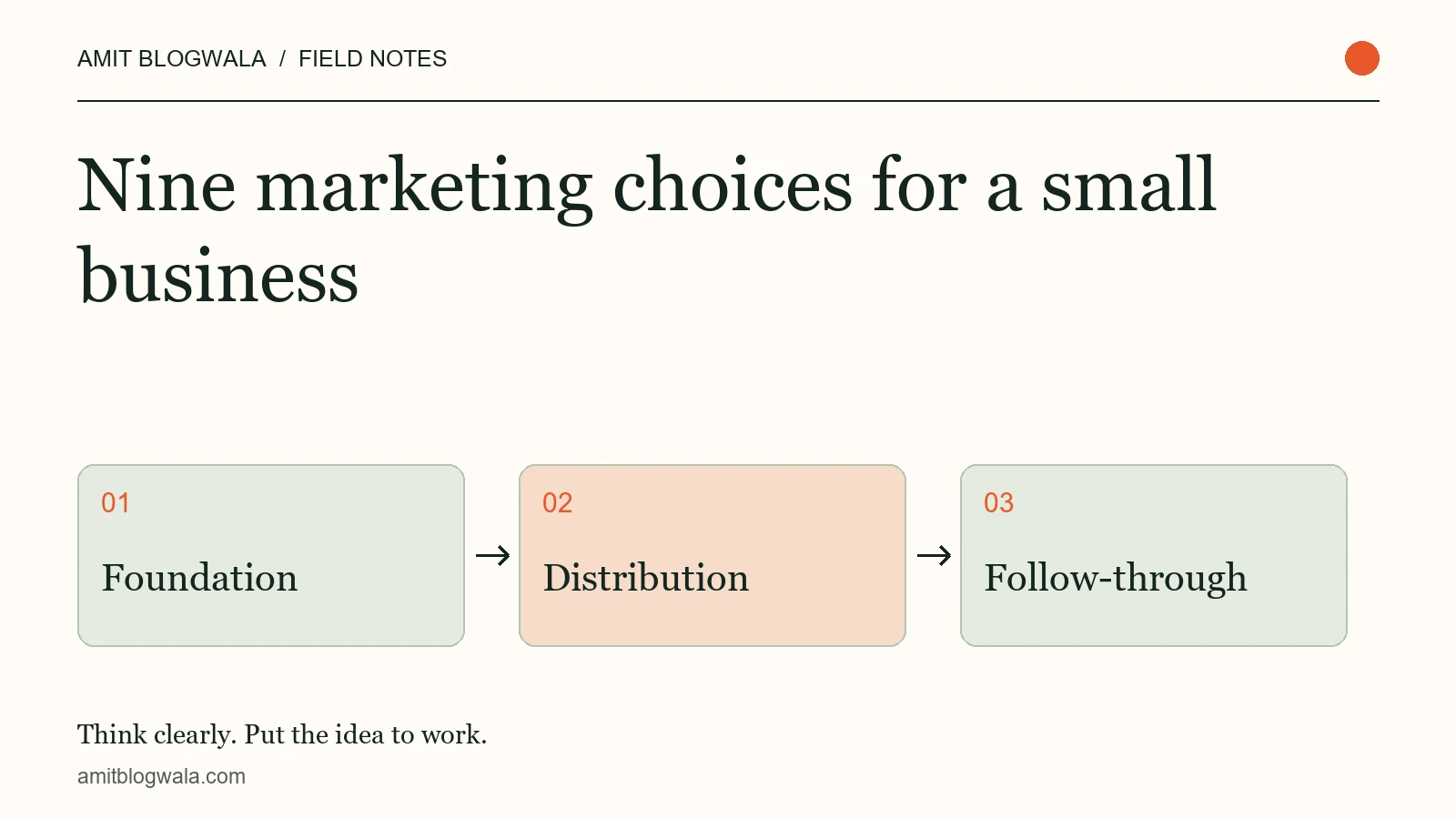
A small-business marketing plan should choose a few connected actions rather than attempt every channel. Start with audience, offer and evidence, then decide how people will discover you and what happens next. This refresh replaces the original 2020 tactic list; results depend on context.
Clarify the buyer, the problem, the offer and the evidence you can honestly show.
Choose a primary discovery channel and a useful destination for interested readers.
Create a clear contact path, maintain permission-based follow-up and review qualified outcomes.
Choose a connected set of actions
A small business can start with a clear offer, a useful destination and one realistic way for suitable people to discover it. Add permission-based follow-up only when there is a clear reason and capacity to maintain it. The activities should support the same customer decision.
Write down what you will stop doing during the experiment as well as what you will start. Assign an owner for responding to enquiries and recording whether they fit. Review the actual cost of producing and maintaining the work. If several channels are active but none receives enough attention to learn from, narrowing the plan can make the next decision clearer.
Nine choices to make explicit
- Who the offer is for
- The problem it addresses
- The scope of help available
- The evidence you can share
- The primary discovery channel
- The destination for interested people
- The contact or enquiry process
- Permission-based follow-up where appropriate
- The cost and qualified outcomes to review
Sources and context
This is practical editorial guidance, not a tested guarantee of rankings, leads, sales or income. The right approach depends on your audience, resources and actual results.
Sources provide product, policy or background context; the application framework above is an editorial recommendation. Links reviewed 17 October 2026.
Continue with more articles from Amit, or explore the current ways to work together.