THE USEFUL ANSWER
Facebook marketing uses content, community activity or paid placements to reach people on Facebook. Choose it because your audience and objective fit the channel, not because of a dated global user count. Evaluate business outcomes alongside platform metrics.
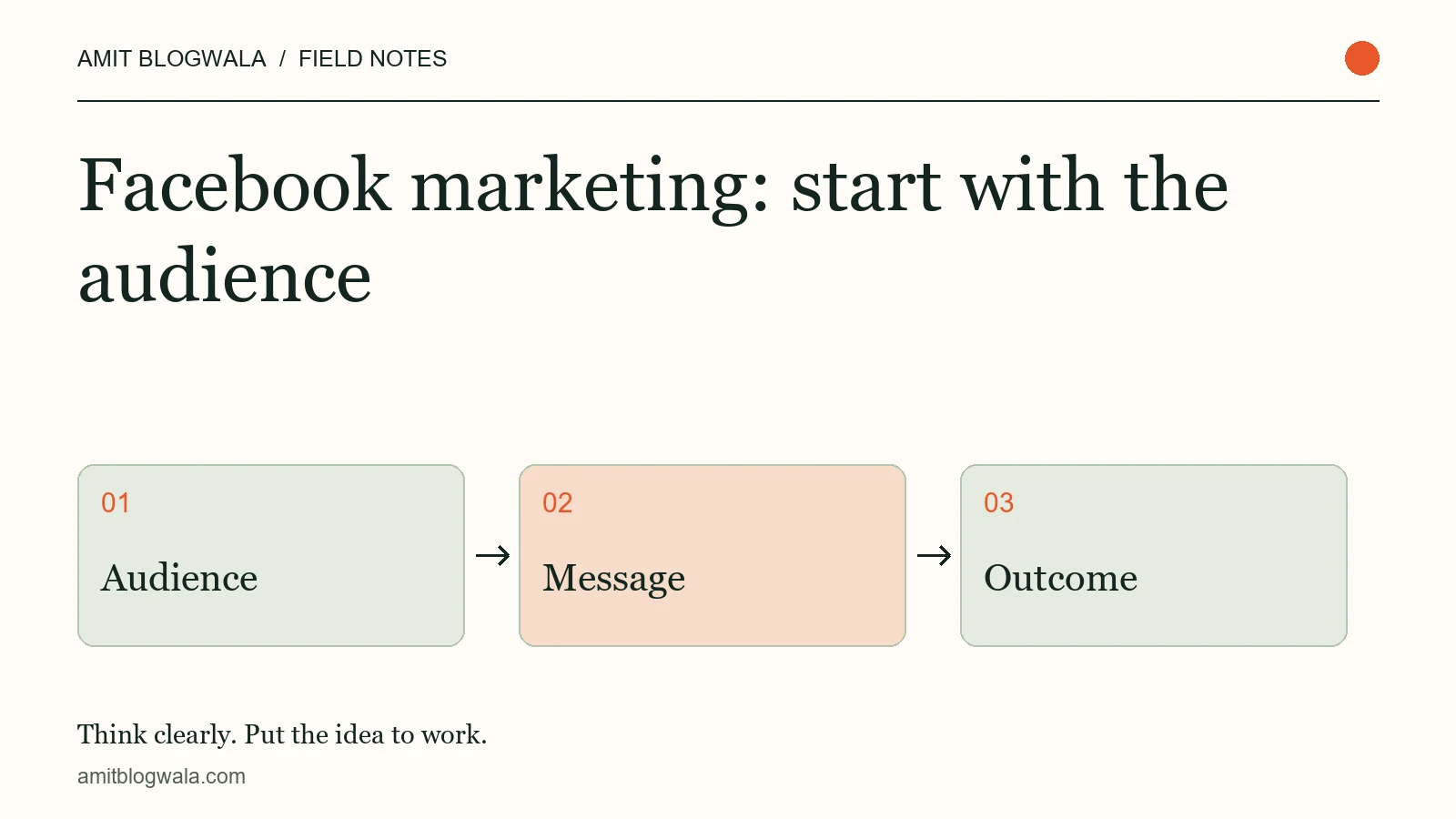
Define who the content is for and the question or need it addresses.
Create a relevant explanation or offer, using permissioned evidence.
Check useful responses, enquiries and costs without treating reach as a business result.
Separate community activity from paid acquisition
Helping an existing community and acquiring new customers are different objectives. Write the intended audience and action before choosing a format or spending on distribution. Check whether you have relevant material and the capacity to respond appropriately.
For an illustrative service business, an educational explanation might address a recurring customer concern and point to clear service information. If testing paid activity, define a budget, qualification criteria and a review point before starting. Count suitable enquiries and the effort required to serve them. Platform exposure is useful context, but it does not establish the commercial value of the campaign.
Sources and context
This is practical editorial guidance, not a tested guarantee of rankings, leads, sales or income. The right approach depends on your audience, resources and actual results.
Sources provide product, policy or background context; the application framework above is an editorial recommendation. Links reviewed 17 October 2026.
Continue with more articles from Amit, or explore the current ways to work together.