THE USEFUL ANSWER
A YouTube consultancy brief should define the audience, problem and kind of help required before discussing deliverables. Separate channel setup, editorial planning and production. No consultant can guarantee views or a fixed growth timetable.
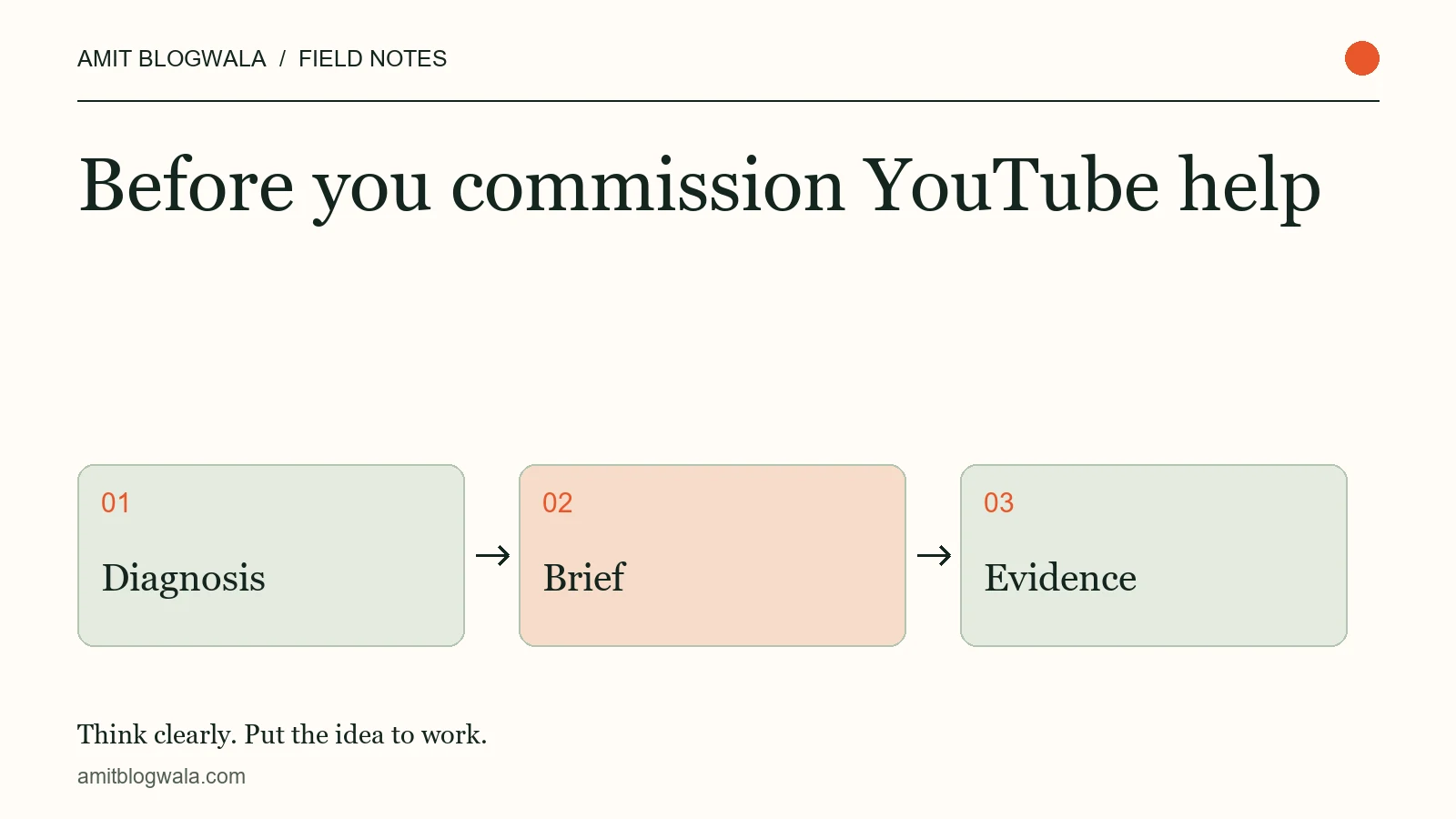
Identify whether the difficulty is topic selection, packaging, production or audience response.
Specify the videos, decisions and review responsibilities the engagement should cover.
Assess sample work and a clear measurement plan rather than promises of viral growth.
Create a brief that separates the jobs
Before hiring, identify the gap: audience research, channel organization, topic development, scripts, editing or performance interpretation. A consultant may advise on a problem without producing every asset. Make that distinction explicit in the scope.
Ask for relevant samples and an explanation of the decisions behind them. Agree who supplies factual input, owns source footage, approves drafts and handles revisions. Define what will be reviewed after publication and which outcomes cannot be promised. A clear brief lets you compare proposals on the work and responsibilities, rather than comparing an unsupported promise of views with a list of video quantities.
Sources and context
This is practical editorial guidance, not a tested guarantee of rankings, leads, sales or income. The right approach depends on your audience, resources and actual results.
Sources provide product, policy or background context; the application framework above is an editorial recommendation. Links reviewed 17 October 2026.
Continue with more articles from Amit, or explore the current ways to work together.