THE USEFUL ANSWER
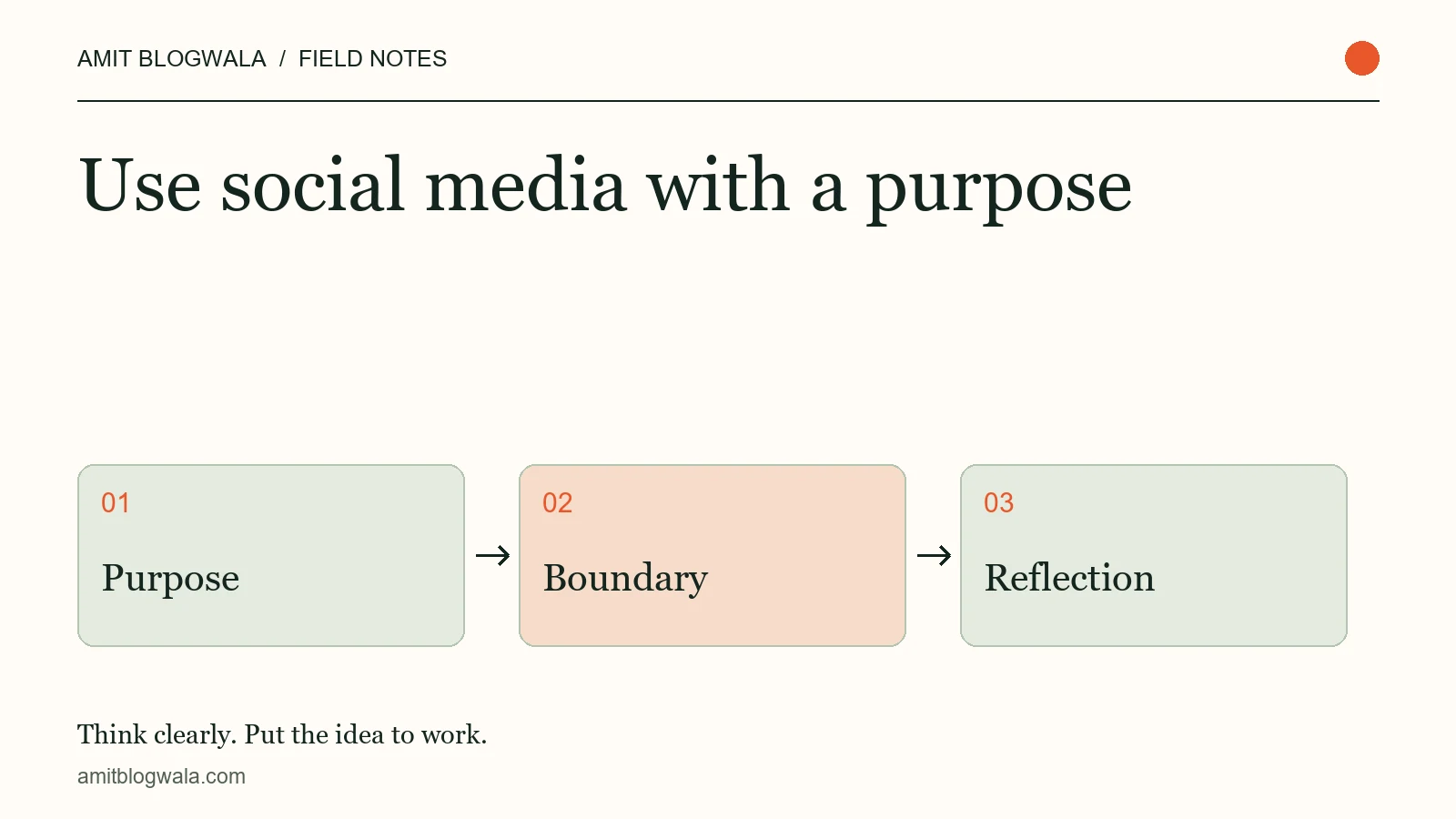
Useful social-media use starts with a purpose: learning, relationships, publishing or business discovery. Review whether your activity supports that purpose. This reflection cannot establish the mental-health effects of a platform or diagnose a pattern of use.
Name what you intend to get from a platform before opening it.
Choose a practical limit or routine that fits your circumstances.
Review what was useful and what felt draining without assuming every person's experience is the same.
Review one routine without judging yourself
Choose a single routine, such as checking a feed before starting work. Record what you intended to do and what actually happened. Was there useful learning or conversation? Did the routine displace something you wanted to prioritize? Treat that observation as information.
Try a modest adjustment that fits your circumstances: a specific time, a narrower purpose or fewer notifications. Review your own experience rather than promising that a boundary will improve everyone’s wellbeing. If distress or difficulty with daily life persists, seek qualified support. An article about purposeful use should not turn a difficult experience into a moral failure.
Sources and context
This is an editorial reflection, not a diagnosis or treatment plan. There is no fixed recovery timetable. If distress persists or affects daily life, consider qualified support.
Sources provide product, policy or background context; the application framework above is an editorial recommendation. Links reviewed 17 October 2026.
Continue with more articles from Amit, or explore the current ways to work together.