THE USEFUL ANSWER
Conscious leadership, as used in this article, means attending to yourself, other people and the effects of your decisions. It is a personal leadership lens, not evidence that a quiet style causes better team performance. Listening must lead to accountable action.
Notice the assumptions and emotions influencing your response.
Ask for the perspectives of people affected, including those who have not spoken.
Agree an action and revisit what changed instead of assuming your intention was the outcome.
Factual review: 16 October 2026. Replaced an unverified performance anecdote with a new hypothetical illustration. This is personal leadership commentary, not a measured case study.
Conscious leadership, as used here, means paying attention to yourself, other people and the effects of your decisions.
Hypothetical example: A team leader could begin by listening to concerns and observing meetings before proposing changes. That may reveal questions to investigate; it does not establish a one-month performance improvement.
Why Awareness Is the New Superpower
In most organizations, leadership is measured by how much one does.
Plans, performance reviews, goals, metrics — the visible side of leadership.
But conscious leadership measures something quieter: awareness.
It’s about seeing clearly before acting. About recognizing how your state of mind becomes your team’s emotional climate.
When leaders operate with awareness, they don’t just drive results — they cultivate resonance.
Their calm becomes a cue for clarity. Their pause becomes permission for others to think deeper.
“You can’t lead others beyond the level of awareness you hold yourself.”
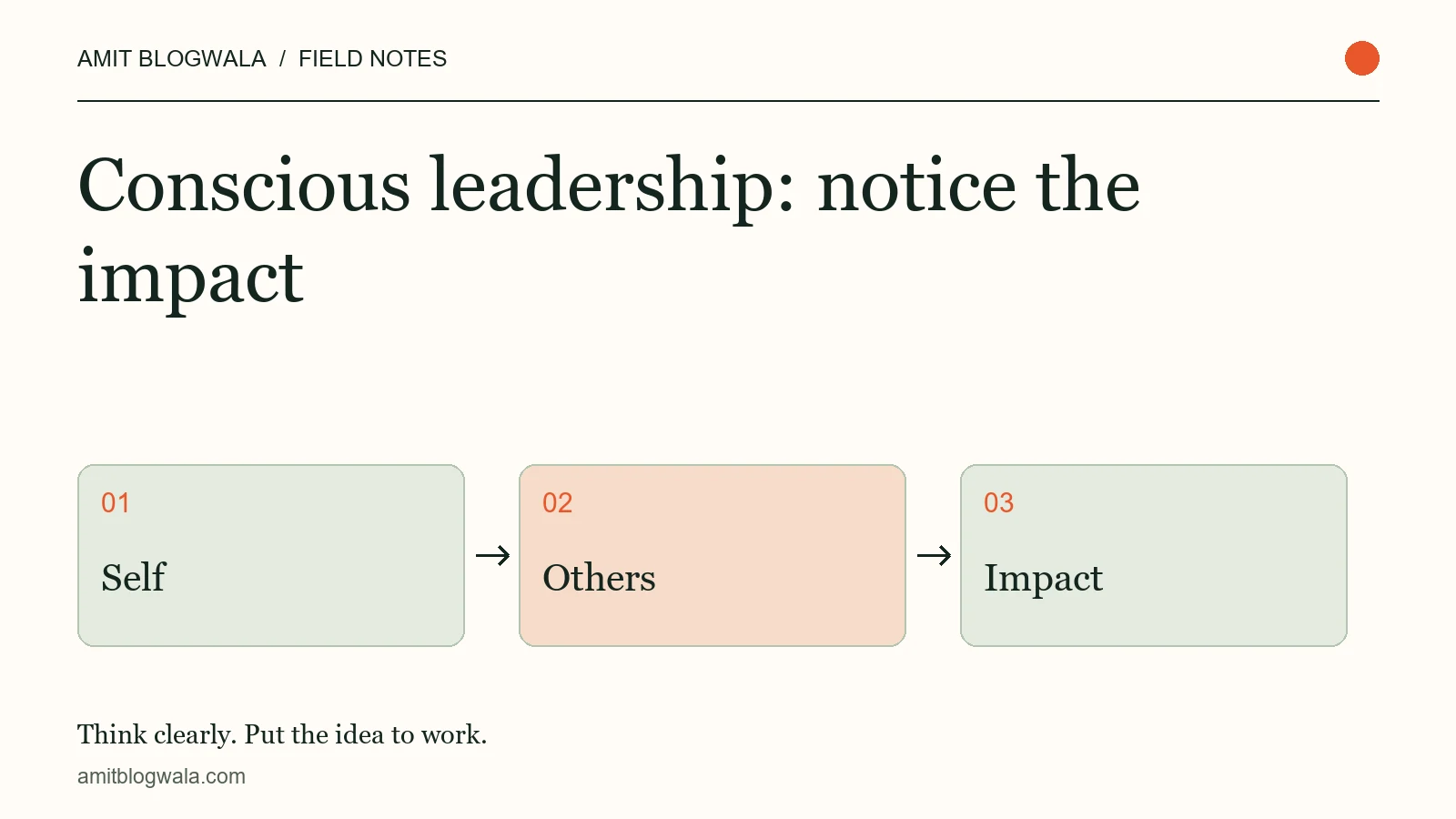
The Three Dimensions of Conscious Leadership
1. Awareness of Self
The first layer of conscious leadership begins inward.
What emotions, fears, or biases are shaping your decisions today?
A leader who can recognize their own patterns can choose their response — instead of being driven by reaction.
2. Awareness of Others
Great leaders listen beyond words.
They notice tone, energy, and silence. They ask not to reply, but to understand.
Empathy turns communication into connection.
3. Awareness of Impact
Every choice, every feedback, every behavior creates ripples.
Conscious leaders think beyond intention — they examine the impact of their actions on morale, trust, and growth.
They water what they want to grow.
Quiet Doesn’t Mean Passive
Being calm doesn’t mean being soft.
It means being centered.
Conscious leaders don’t avoid conflict — they handle it with clarity.
They don’t react to urgency — they respond with awareness.
The result?
Teams feel safe, seen, and self-driven — because leadership feels anchored, not anxious.
“Still waters run deep — and so do still leaders.”
Building a Culture of Conscious Awareness
If you want to bring this into your organization, start small:
Begin meetings with one minute of silence before jumping into discussion.
Ask reflective questions like “What are we not seeing?” or “How are people feeling about this?”
Model transparency — admit when you don’t know something.
Reward awareness and empathy as much as innovation and performance.
These micro-moments compound into a culture of consciousness.
And culture, once rooted in awareness, sustains itself.
The Silent Shift
Leadership isn’t about being the loudest voice in the room — it’s about creating a room where every voice can be heard.
In the hypothetical example, listening is a starting point for action—not proof of a guaranteed transformation.
And when people feel seen, they start showing up differently.
That’s the quiet power of conscious leadership.
It doesn’t demand attention.
It earns trust.
🪞 Because the loudest impact is often made in silence.
Also read How Leaders Shape Culture Through Choices
Sources and context
This is a personal leadership lens and a practical reflection exercise, not a validated causal model or measured case study.
No independent performance study is claimed for this commentary. The exercise is an original editorial suggestion.
Continue with more articles from Amit, or explore the current ways to work together.