THE USEFUL ANSWER
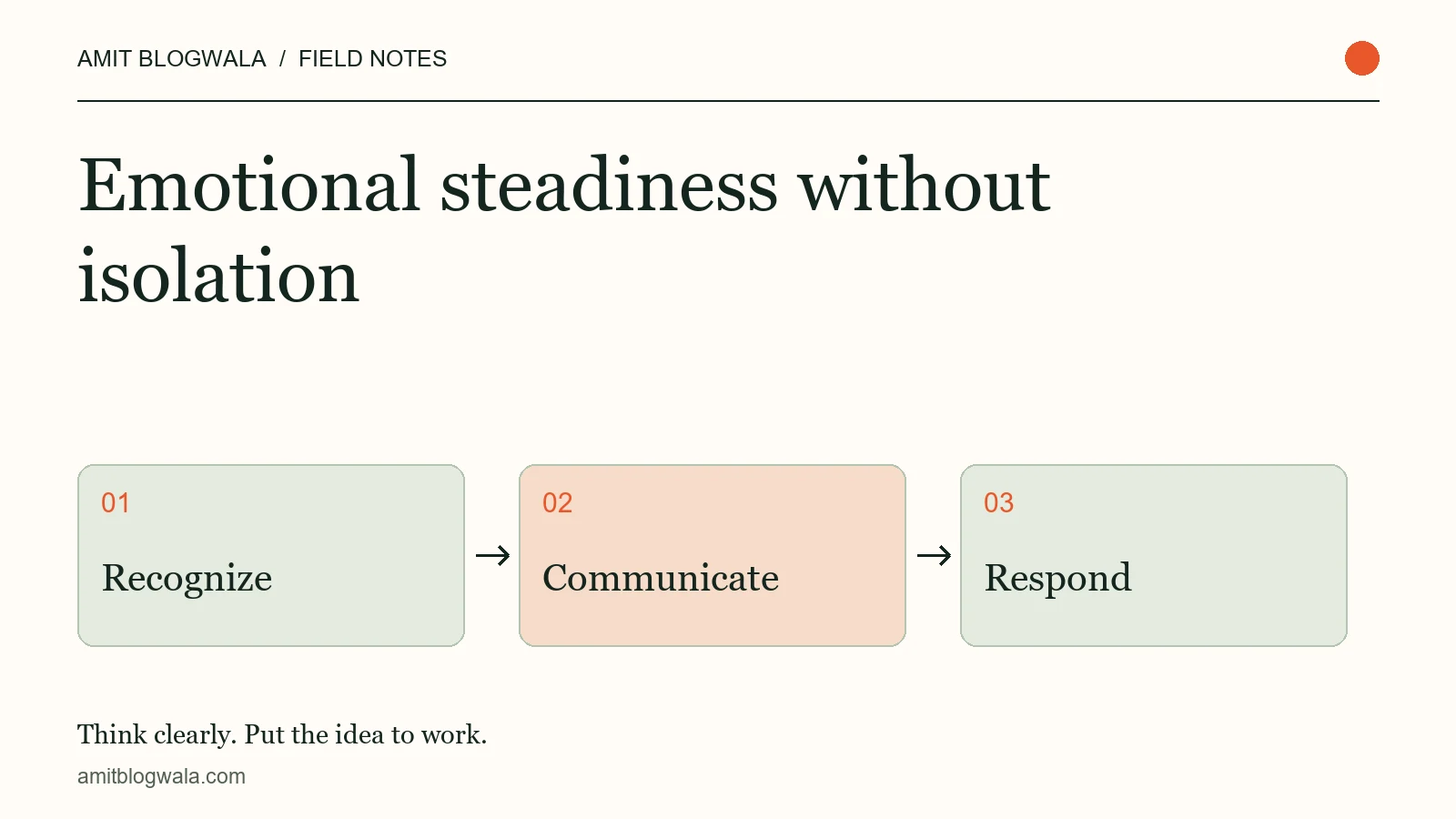
Emotional steadiness does not require hiding distress or refusing support. This personal perspective distinguishes choosing how to respond from suppressing feelings. It is not a clinical model of masculinity or a prescription to perform through illness.
Notice what you are feeling without treating the feeling as a failure.
Ask clearly for listening, practical help or professional support.
Choose a proportionate next action, including rest or a boundary when needed.
Make room for a specific request
When a situation is difficult, try describing the event and the support you need without making a global judgment about yourself. A request might be for listening, help with a practical task, time to rest or help finding qualified support.
Choosing a response can include setting a boundary or postponing a nonurgent commitment. It does not require pretending that distress has disappeared. Review whether the action was feasible and whether more support is needed. This is a personal reflection exercise; persistent symptoms, safety concerns or difficulty functioning deserve appropriate professional attention rather than pressure to demonstrate toughness.
Sources and context
This is an editorial reflection, not a diagnosis or treatment plan. There is no fixed recovery timetable. If distress persists or affects daily life, consider qualified support.
Sources provide product, policy or background context; the application framework above is an editorial recommendation. Links reviewed 17 October 2026.
Continue with more articles from Amit, or explore the current ways to work together.